

Urgent dispatch
Emergency Appliance Repair in Illinois
Urgent appliance faults across 12 Illinois cities and 219 ZIP codes. Read the triage list first, then call. Some faults need your utility or 911 before they need us.
What should I do first in an appliance emergency in Illinois?
Make it safe before you make the call. Unplug the appliance or switch off its breaker, close the water or gas valve, and move people away. Then phone (888) 217-4156. If you smell gas or see smoke, leave the building and call your utility or 911 first.
Call (888) 217-4156 for the next available window.

Is this an emergency in Illinois?
Call us now
- A full freezer that is warming up, with food at risk
- A washer that is actively leaking onto the floor
- A burning smell coming from the dryer during or after a cycle
- An oven that will not switch off, or a control panel stuck in a cycle
- A freezer that is thawing, especially a chest freezer holding bulk food
Call your utility or 911 first
- A gas smell anywhere near the appliance. Leave the building first, then call your gas utility or 911 from outside
- Sparking, arcing or smoke from an appliance or its outlet
- Standing water that has reached an electrical outlet or an extension lead
- Any active fire, however small. Do not open an oven or dryer door to check
We are an appliance repair company, not an emergency service. For any of the above, the utility or the fire service must come first. Guidance: US Fire Administration home fire prevention (opens in a new tab) and CPSC appliance recall notices (opens in a new tab) .
Shut it off safely
Unplug it
Pull the plug if you can reach it safely and the area is dry. If you cannot, switch off the breaker for that circuit at the panel instead.
Close the water valve
For a washer, close the supply valve behind or beneath the appliance. Turn it clockwise until it stops.
Close the gas valve
For a gas range, oven or dryer, close the appliance shut-off valve on the supply line. If you smell gas, leave the building and call from outside instead.
Clear the area
Move people, pets and anything flammable away. Mop standing water so it cannot reach an outlet, and leave the appliance switched off until a technician arrives.
What drives appliance emergencies in Illinois
Illinois freeze-thaw cycles move water where it should not go. Unheated basement laundry rooms and garages let washer inlet hoses and ice maker lines freeze, then split when they thaw. Winter air drops indoor humidity far enough to make static and dust a real problem for dryer sensors.
Many Illinois homes put the washer and dryer in the basement, which means long vent runs and more lint build-up per foot. Basement laundry also puts drain pumps below the sewer line, so backflow shows up as a washer that will not drain.
Those two factors explain most of the urgent Illinois calls we take. Across 12 cities and 219 ZIP codes the pattern repeats: the appliances that fail suddenly here are the ones carrying the heaviest local load, and the failures cluster in the season that loads them.
If a repair dispute follows an emergency callout, Illinois consumers can contact the Illinois Attorney General, Consumer Protection (opens in a new tab) . For product safety recalls, check CPSC appliance recall notices (opens in a new tab) , and for fire prevention guidance see US Fire Administration home fire prevention (opens in a new tab) .
What same-day realistically means
Same-day service in Illinois means a technician arrives before the end of the working day, not within the hour. Whether it happens depends on three things: how early you call, how many technicians are already committed nearby, and whether the part your appliance needs is standard van stock or has to be ordered.
Calls placed in the morning have the best chance. By late afternoon the day is usually committed, and the honest answer becomes the first window tomorrow. A dispatcher who promises same-day without checking is guessing, so we tell you what is actually open instead.
A same-day visit also does not always mean a same-day repair. If the fault turns out to be a brand-specific control board or a sealed-system component, the diagnosis happens today and the part is fitted on a return visit. The technician tells you which situation you are in before you approve anything, and nothing is dismantled until you have agreed to the work.
Highest-urgency repairs in Illinois
These are the appliances where a fault escalates fastest, either because food is at risk or because the failure mode itself is hazardous.
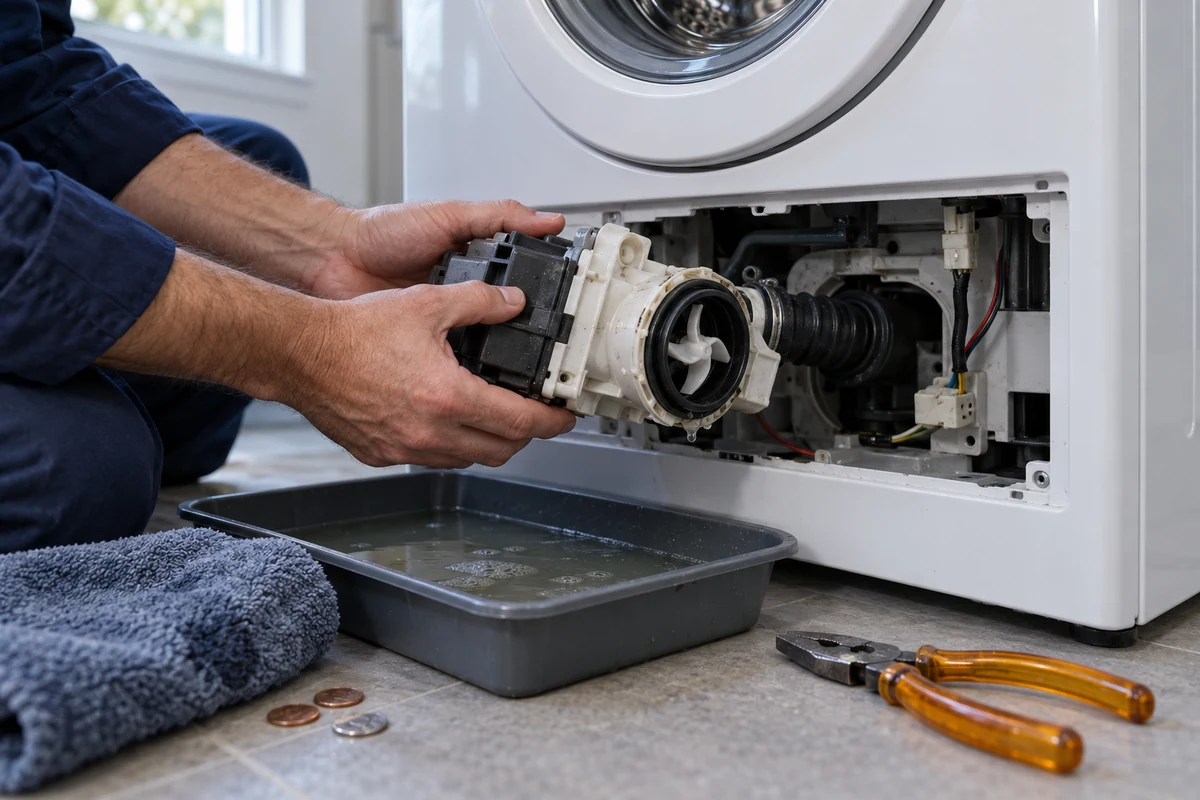 Urgent
Washing Machine Repair in Illinois
Washer will not drain, spin or start.
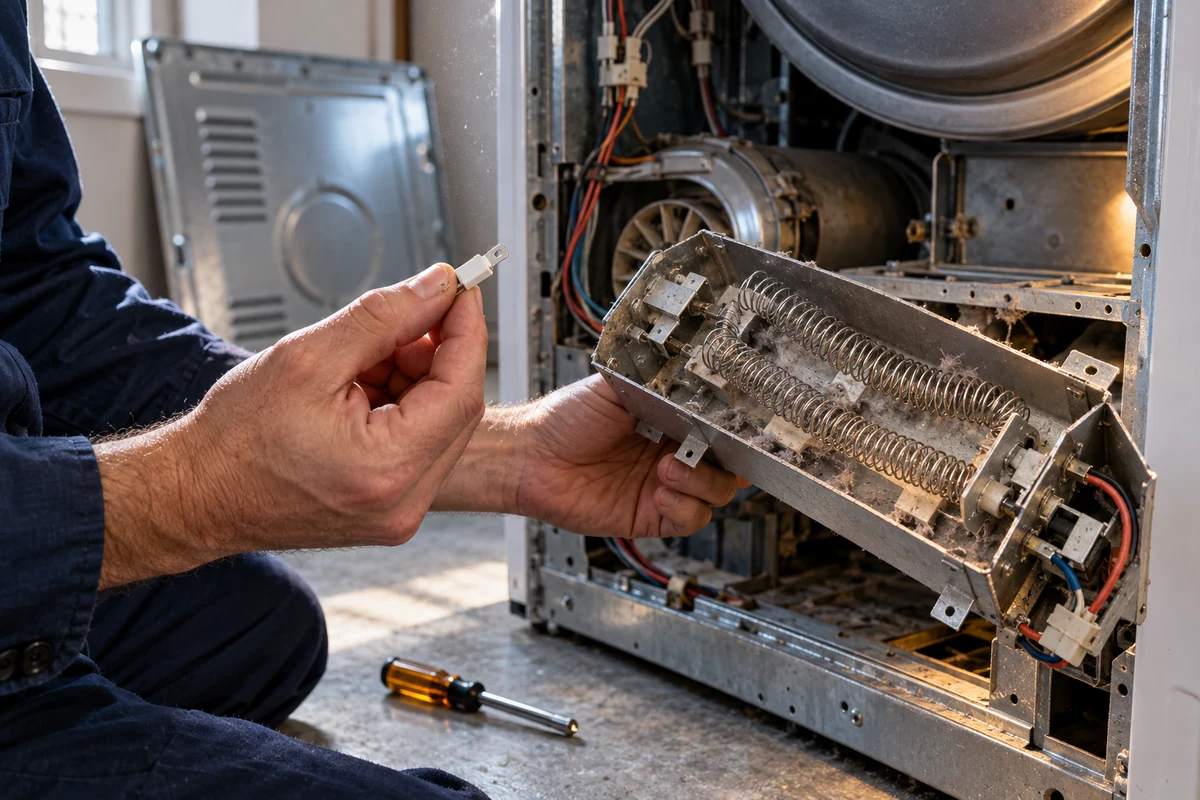 Urgent
Dryer Repair in Illinois
No heat, long cycles or a drum that will not turn.
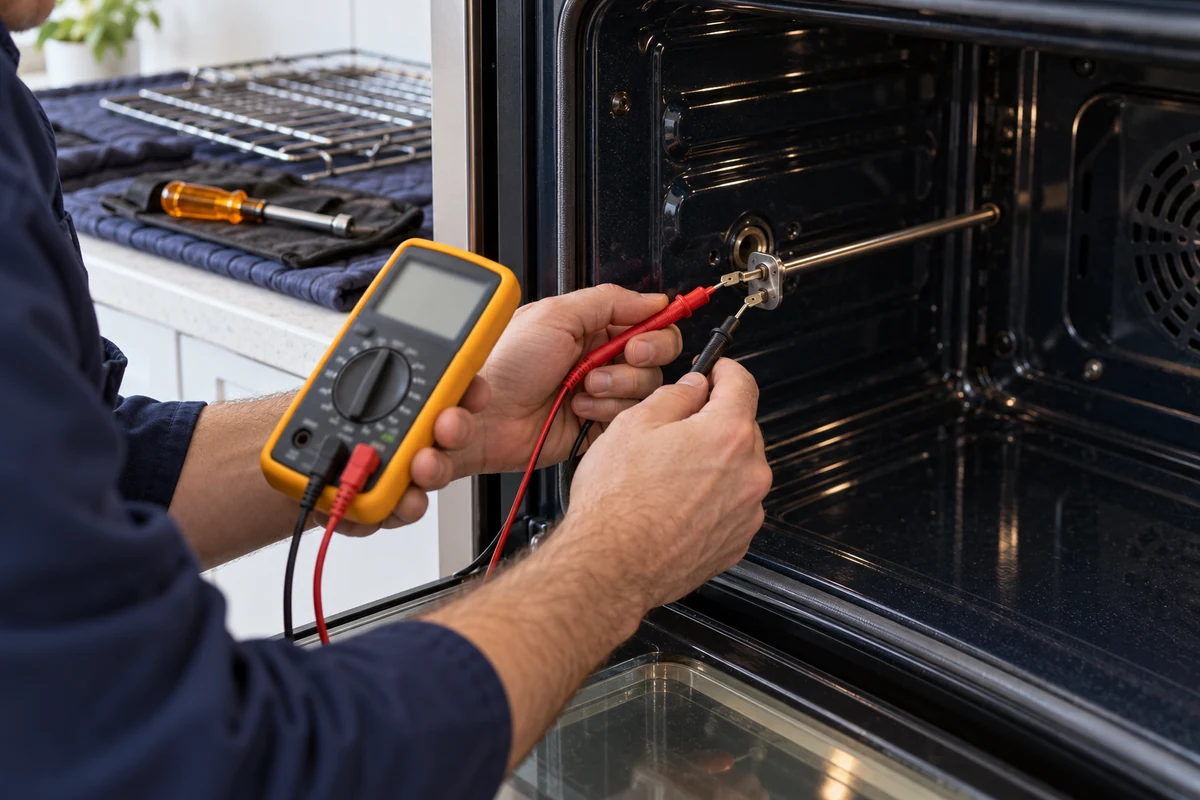 Urgent
Oven and Range Repair in Illinois
Oven will not heat or bakes unevenly.
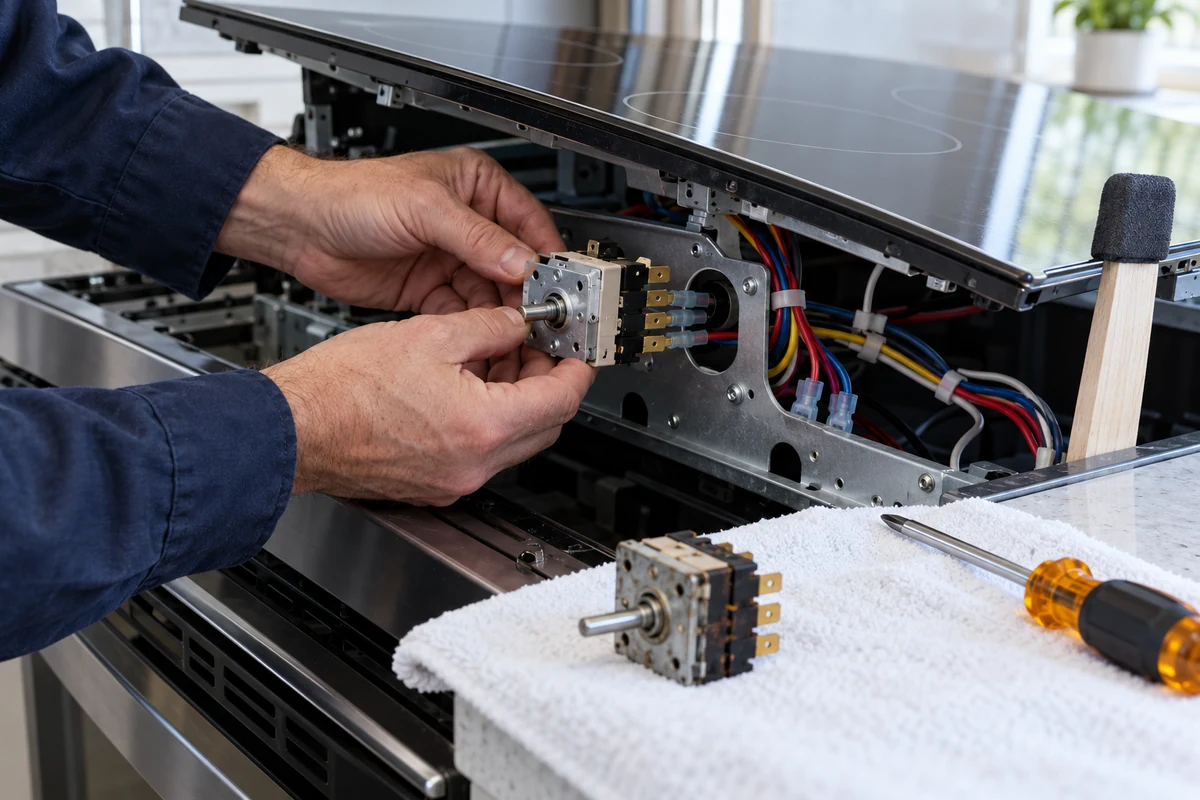 Urgent
Stove and Cooktop Repair in Illinois
Burners will not light or elements stick on.
 Urgent
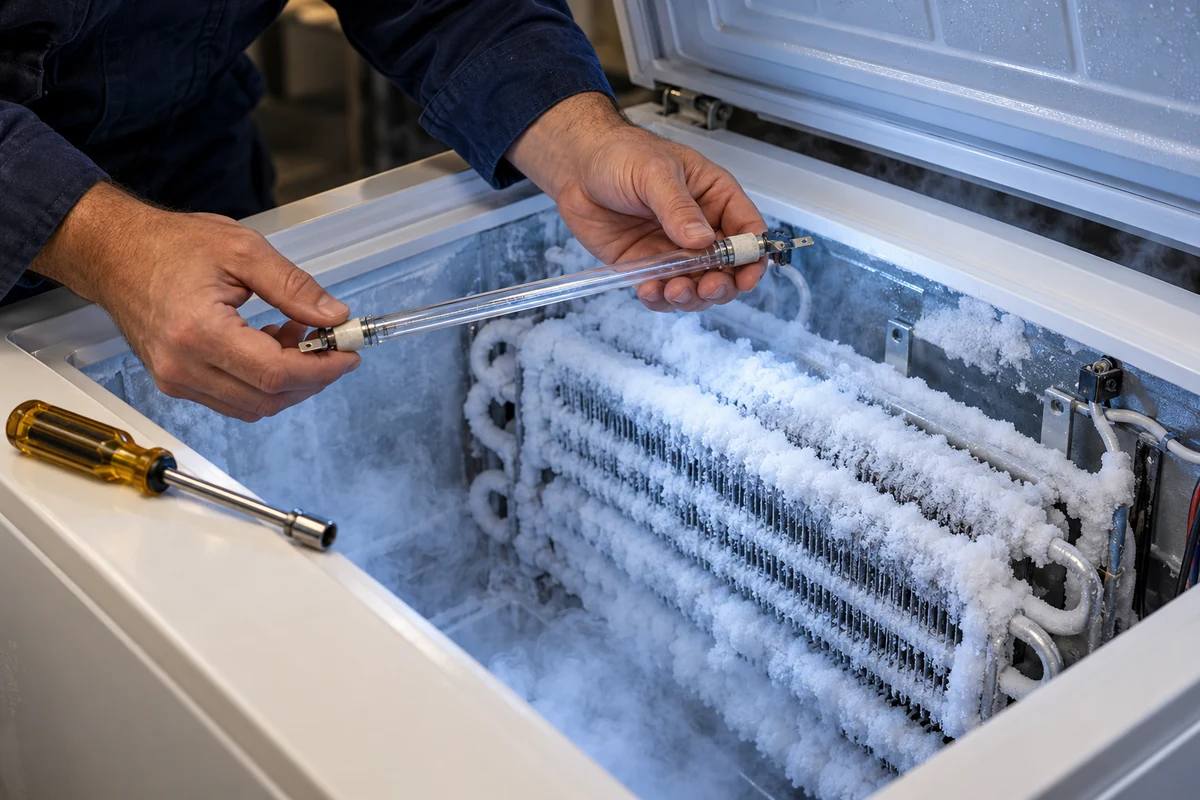
Freezer Repair in Illinois
Freezer running warm or frosting over.
Not sure what has failed?
Start from the symptom. Each guide ranks the likely causes and says when to stop and unplug it.
Where urgent calls come from in Illinois
A sample of the Illinois areas urgent calls are routed from, with the housing mix behind the faults we see there. Each links to that city's own emergency page.
- Aurora (Kane County, 10 ZIP codes)
Aurora spans older river-corridor housing and newer subdivisions, so appliance ages differ sharply across the city. Urgent calls here reach Downtown, Near East Side, Far East Side, Fox Valley. Routes there pass Fox River.
- Carol Stream (DuPage County, 6 ZIP codes)
Carol Stream is planned suburban housing with standardised kitchen layouts, which makes part fitment predictable. Urgent calls here reach Downtown, Westwood, Lies Road corridor. Routes there pass Klein Creek.
- Bloomington (McLean County, 8 ZIP codes)
Bloomington is steady single-family housing, with most laundry in a conditioned basement or main-floor closet. Urgent calls here reach Downtown, Founders Grove, Eastland, White Place. Routes there pass Miller Park.
- East St. Louis (St. Clair County, 7 ZIP codes)
East St. Louis has an older housing stock where original wiring and plumbing often predate modern appliance loads. Urgent calls here reach Downtown, Alta Sita, Winstanley. Routes there pass Mississippi River.
- Chicago (Cook County, 84 ZIP codes)
Chicago two-flats and three-flats put laundry in shared basements, and lake-effect winters reach every uninsulated line down there. Urgent calls here reach Lincoln Park, Logan Square, Hyde Park, Pilsen, Lakeview, Rogers Park, Bridgeport. Routes there pass Lake Michigan and Chicago River.
- Palatine (Cook County, 7 ZIP codes)
Palatine is suburban with attached garages, and garage refrigerators and freezers are common second appliances. Urgent calls here reach Downtown Palatine, Plum Grove, Deer Grove. Routes there pass Deer Grove Forest Preserve.
- Schaumburg (Cook County, 7 ZIP codes)
Schaumburg has a large share of 1970s to 1990s housing now reaching the point where original appliances are being replaced. Urgent calls here reach Town Square, Weathersfield, Woodfield area. Routes there pass Woodfield Mall.
- Peoria (Peoria County, 29 ZIP codes)
Peoria has a lot of early twentieth century housing where appliance circuits were added later and run near capacity. Urgent calls here reach Downtown, West Bluff, North Peoria, Averyville. Routes there pass Illinois River.
- Champaign (Champaign County, 6 ZIP codes)
Champaign rental stock serves a university calendar, so appliance repairs spike around August turnover. Urgent calls here reach Campustown, Downtown, Clark Park, Savoy area. Routes there pass University of Illinois campus.
Emergency coverage by city
Every Illinois city we serve has its own emergency page with local dispatch detail. Urgent calls are routed to the nearest available technician rather than a district van.
For routine bookings, start from the Illinois service area page instead.
Emergency appliance repair in Illinois, common questions
Will you tell me to call someone else?
Sometimes, and we would rather do that than send a technician who cannot help. A gas leak needs your utility. Smoke or fire needs 911. A blocked household drain needs a plumber, and a fault that trips the breaker with every appliance unplugged needs an electrician.
What if the appliance has flooded the room?
Close the supply valve, then switch off the circuit at the breaker before stepping into standing water. Mop what you can reach safely. Water that has reached flooring or a ceiling below has already caused damage beyond the appliance, so photograph it for your insurer.
Can I keep using the appliance until you arrive?
No, and this is the one instruction worth following strictly. Every additional cycle pushes more water into places you cannot see, or runs a hot appliance on restricted airflow. Switch it off and leave it off until the technician has looked at it.
What happens during the first visit in Illinois?
The technician inspects the appliance, confirms what has actually failed and explains it in plain language before anything is taken apart. You hear which component is at fault, whether the part is on the van, and what the repair involves. Work proceeds only once you approve it.
Are your technicians licensed and insured in Illinois?
Yes. We hold the licensing and insurance required to carry out appliance repair work in Illinois, and technicians carry identification on every visit. Specific license numbers are listed on our about page once verified. Sealed refrigerant work is handled only by EPA Section 608 certified technicians.
Which cities do you cover in Illinois?
We serve 12 cities across Illinois, covering 219 ZIP codes in total. Every city has its own page listing the exact ZIP codes dispatched to, so you can confirm your own address in seconds. The full list appears further down this page.
Same-day windows are often still open today.
We hold back part of each day for breakdowns that cannot wait, such as a warming freezer or a washer leaking onto the floor. Call now and the dispatcher will tell you honestly whether today or tomorrow morning is the earliest realistic arrival window.
Mon to Sun, 8:00 AM to 5:00 PM ET. The dispatch line takes calls any day between 8:00 AM and 5:00 PM ET. Outside those hours the line is closed and reopens at 8:00 AM ET.